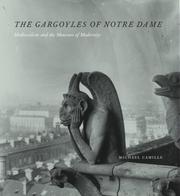
The Gargoyles of Notre Dame
Most of the seven million people who visit the cathedral of Notre Dame in Paris each year probably do not realize that the legendary gargoyles adorning this medieval masterpiece were not constructed until the nineteenth century. The first comprehensive history of these world-famous monsters, The Gargoyles of Notre-Dame argues that they transformed the iconic thirteenth-century cathedral into a modern monument. Michael Camille begins his long-awaited study by recounting architect Eugene Viollet-le-Duc's ambitious restoration of the structure from 1843 to 1864, when the gargoyles were designed, sculpted by the little-known Victor Pyanet, and installed. These gargoyles, Camille contends, were not mere avatars of the Middle Ages, but rather fresh creations—symbolizing an imagined past—whose modernity lay precisely in their nostalgia. He goes on to map the critical reception and many-layered afterlives of these chimeras, notably in the works of such artists and writers as Charles Meryon, Victor Hugo, and photographer Henri Le Secq. Tracing their eventual evolution into icons of high kitsch, Camille ultimately locates the gargoyles' place in the twentieth-century imagination, exploring i
For young readers
Book data: Open Library