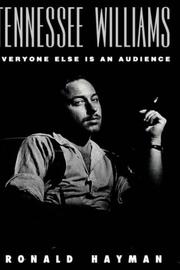
Tennessee Williams
everyone else is an audience
Few playwrights write as much of their lives into every work as did Tennessee Williams, and few had lives that were so obviously theatrical. Growing up amid abusive alcoholism, genteel posturing, and the incipient madness of his beloved sister, Rose, Williams produced plays in which violence exploded into rape, castration, and even cannibalism, projecting dramatic personal traumas. In this frank, compelling study, the distinguished biographer and critic Ronald Hayman explores the intersection of biography and art in one of the most exuberantly autobiographical dramatists of the American theater. By the time he died, in 1983, Williams's reputation had seriously declined. More than twenty years of drug and alcohol addiction, coupled with devastating openness about his promiscuous homosexuality, had all but destroyed one of America's greatest playwrights, while Williams's new works were increasingly unsuccessful. In recent years, however, Broadway revivals and amateur productions have testified to his enduring greatness as one of the shapers of the American theater. The major plays, such as The Glass Menagerie, Cat on a Hot Tin Roof and A Streetcar Named Desire, never disappeared from
For young readers
Book data: Open Library