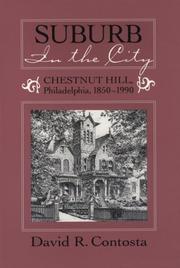
In Suburb in the City, David Contosta tells the story of how Chestnut Hill, Pennsylvania, once a small milling and farming town, evolved to become both a suburban enclave for wealthy Philadelphians and a part of the city itself. In 1854, the railroad connected Philadelphia and Chestnut Hill and the village was annexed by the city. Attuned to the romantic currents of the age, the wealthy men and women who moved to Chestnut Hill believed that the village's semi-rural surroundings might uplift them physically, spiritually, emotionally, and morally. At the same time, they wanted to continue to enjoy the best that the city had to offer while escaping from its more unpleasant aspects: dirt, crime, disease, and other shortcomings. They thus cultivated a dual identity with both suburb and city. Ironically, this led to a sense of division as prosperous suburbanites held themselves aloof from the resident shopkeepers and domestic servants who provided so many of their creature comforts. Being a suburb in the city also meant that Chestnut Hill could not control its political destiny, as communities outside the municipal limits could. In response, residents developed a number of civic organiza
For young readers
Book data: Open Library